The FAA’s New DETER Program: What Every Drone Pilot Needs to Know
The era of warnings is over. Here’s what the FAA’s new enforcement program means for recreational and commercial pilots — and how to make sure you’re covered.
For years, getting caught flying your drone somewhere you shouldn’t meant a phone call, maybe a conversation with an FAA inspector, and a note in your file. First-time offenders almost always walked away with a warning and a lesson learned. The FAA called it “educate first,” and for most of the drone industry’s existence, it worked, or at least, it was all the agency had bandwidth for.
That changed on April 17, 2026.
The FAA launched DETER—the Drone Expedited and Targeted Enforcement Response Program —and, with it, a fundamentally different approach to drone enforcement. Under DETER, first-time violations no longer get the educational treatment. They get a formal Violation Notice, a ten-day deadline to settle, and a permanent mark on their FAA record.
If you fly drones in the United States, this matters. Here’s what you need to understand.
What DETER Actually Is
DETER is a streamlined enforcement process designed to quickly handle the growing volume of drone violations. When the FAA identifies a case involving a first-time offender and a violation that doesn’t rise to the level of reckless endangerment or criminal activity, they issue a formal Violation Notice, delivered by email and overnight mail.
That notice includes the investigation report number, the investigator’s contact info, the date and location of the incident, and the specific regulations you violated. You then have ten days to accept a settlement.
Here’s the catch: accepting means admitting liability, waiving your right to appeal, and complying with whatever corrective action the FAA prescribes. That could be a reduced civil penalty, mandatory training, or temporary surrender of your Remote Pilot Certificate. The upside is a faster, lighter resolution. The downside is that it’s permanent — the violation lives on your FAA record forever.
If you decline the settlement, your case goes through the traditional enforcement pipeline: more investigation, higher potential penalties, and the possibility of certificate revocation.
For serious violations — reckless flights, operations near sensitive facilities, drug-related activity, harassment, or anything suggesting a pilot isn’t qualified to fly — DETER doesn’t apply. Those cases go straight to full enforcement.
Why This Is Happening Now
Two things converged to make DETER inevitable.
First, detection technology caught up. Between Remote ID receivers, counter-UAS networks, and integrated monitoring systems, authorities now have real-time visibility into who’s flying, where, and whether they should be. The FAA went from having a detection problem to having a volume problem — more evidence, more cases, and no fast way to process them.
Second, the political and security environment shifted. The Restoring American Airspace Sovereignty executive order directed the FAA to be more aggressive in addressing unauthorized drone operations. Major events on the horizon — including the 2026 FIFA World Cup — have amplified the urgency. The FAA can’t afford to sit on violation cases for months when the next incident could happen tomorrow.
DETER is the agency’s answer: resolve routine violations in days rather than months, free up resources for serious cases, and send a clear message that the rules apply to everyone — including first-time offenders.
What This Means for You
Whether you fly recreationally or commercially, the calculus just changed.
The margin for error is gone. Under the old system, a first mistake was a learning opportunity. Under DETER, a first mistake is a formal enforcement action with permanent consequences. Flying in restricted airspace because you didn’t check, launching without LAANC authorization because you forgot, operating in a TFR you didn’t know about — these are all scenarios that could now trigger a Violation Notice.
“I didn’t know” is not a defense. The FAA has spent nearly a decade educating the public about drone regulations. With DETER, the agency is signaling that the education phase is over. Ignorance of the rules doesn’t exempt you from enforcement — it’s the reason you’re being enforced against.
Compliance isn’t optional anymore — it’s protection. This is where preparation becomes everything. Pilots who check airspace, get proper authorization, verify weather and NOTAMs, and fly within the rules aren’t just being responsible. They’re insulating themselves from an enforcement system that now moves fast enough to catch up with them.
How to Stay on the Right Side of DETER
The good news is that staying compliant isn’t complicated — it just requires building good habits before every flight.
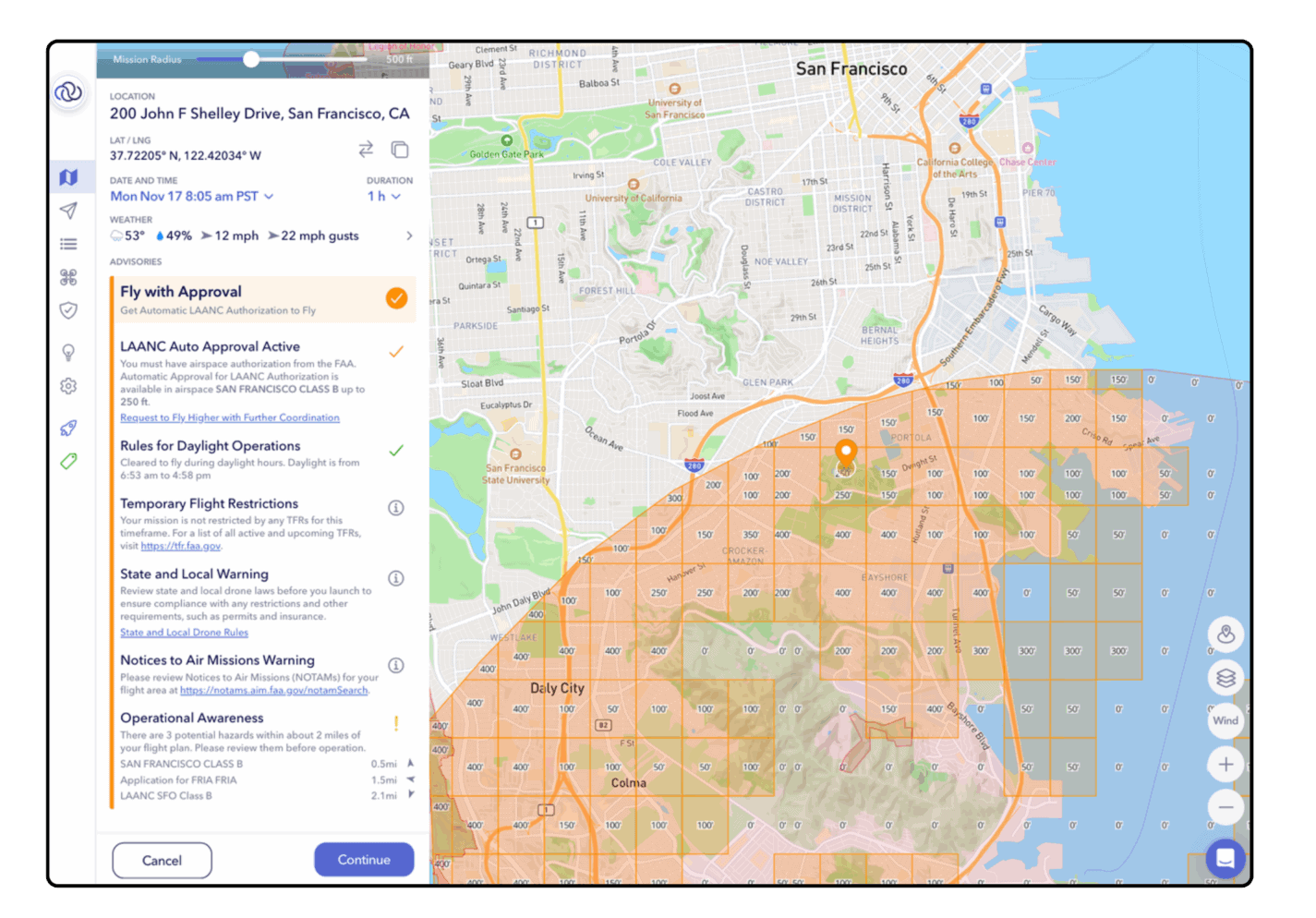
Check your airspace every time. This is the single most common reason pilots get flagged. Controlled airspace, TFRs, and restricted zones change constantly. What was clear yesterday might not be clear today. Using a real-time airspace tool — like the one built into AutoPylot — ensures you’re seeing the current picture, not an outdated one.
Get LAANC authorization when you need it. If you’re flying in controlled airspace, you need authorization. Period. LAANC makes this fast — in most cases, you can get approved in seconds through an FAA-approved provider like AutoPylot. There’s no reason to skip this step, and under DETER, the consequences are real.
Log your flights. If you’re ever on the receiving end of a Violation Notice, having a documented flight history that shows consistent compliance is your best evidence that an incident was an anomaly, not a pattern. AutoPylot’s flight logging and planning tools automatically create that paper trail.
Stay current on regulations. Part 107 rules, recreational flying guidelines, and local restrictions evolve. Following the FAA’s updates and using tools that surface relevant regulatory information at the point of flight planning keeps you ahead of changes you might otherwise miss.
The Bigger Picture
DETER is more than a new enforcement mechanism. It’s a signal that the drone industry has matured past the point where leniency makes sense as a regulatory strategy. There are nearly a million registered drones in the U.S., the airspace is getting more complex every year, and the FAA is making clear that participation in that airspace comes with accountability.
For pilots who already take compliance seriously, DETER doesn’t change much about how you fly; it just raises the stakes for the flights where you cut corners. For pilots who’ve been casual about the rules, this is the wake-up call.
The era of warnings is over. The era of accountability is here. And the best way to navigate it is to fly every mission like someone’s watching, because increasingly, they are.
AutoPylot is an FAA-approved LAANC and B4UFLY provider — the highest-rated in the U.S. — used by over 500,000 pilots nationwide. Plan your flights, check airspace, get authorized, and stay compliant at autopylot.io.